
Everything You Need to Know About Morel Season 2026
Here's where, when, and how to find this elusive treasure

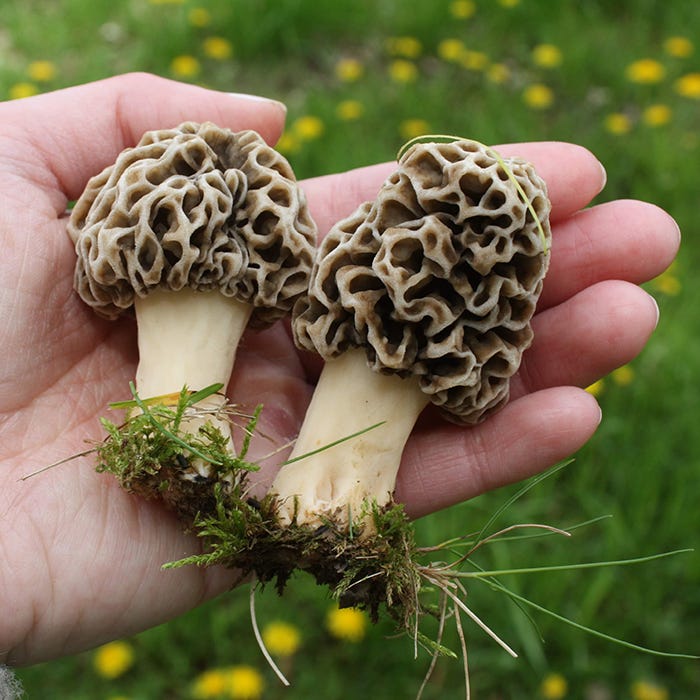
Every spring, something shifts in the forager’s brain. The days get longer, the ground starts to warm, and suddenly all you can think about is getting into the woods. Morel season has that effect on people. It’s short, it’s competitive, and it rewards the prepared.
So let’s get you prepared!
When is morel season?
Here’s the thing about morels (and mushrooms generally): they don’t care what month it is. They care about conditions.
The sweet spot is daytime temperatures around 60°F with nights staying above 40°F, and soil temps hitting 50-55°F. Add a good rain event into the mix, and you may wake up the next morning to a full flush. The 2026 season is already underway—Oklahoma had confirmed finds as early as March 1st, and reports are spreading northward fast.
Here’s a rough timing guide by region:
March: Southern states, Oklahoma, California early starters
April: Central Illinois, Missouri, Mid-Atlantic, lower Midwest
May: Peak season across Michigan (morels grow in all 83 counties), Wisconsin, Indiana
June–July: Pacific Northwest, chasing elevation all the way up to 5,000 feet
One thing every experienced hunter will tell you: morels can appear overnight. A warm rain followed by a mild day can trigger a flush in 24–48 hours, so don’t wait around once conditions look right.
Where to find morels
Finding morels is less about luck than it seems. It’s really about reading the land correctly.
Around dead or dying elm trees are the classic morel zone. Cottonwood, ash, tulip poplar, and apple trees are also worth targeting. In the western US, recently burned conifers are where the serious hunters go. The first spring after a wildfire can produce some of the most impressive flushes you’ll ever see.
Early in the season, focus on south-facing hillsides as they warm up first. As spring progresses, move toward creek beds and river bottoms. Later still, follow the elevation upward.
This is the most repeated advice for a reason: walk slowly, scan a few feet ahead, and train your eye to look for shapes rather than colors. Morels blend in remarkably well. Once you’ve spotted your first one, stop and look around. There are almost certainly more nearby.
The False Morel
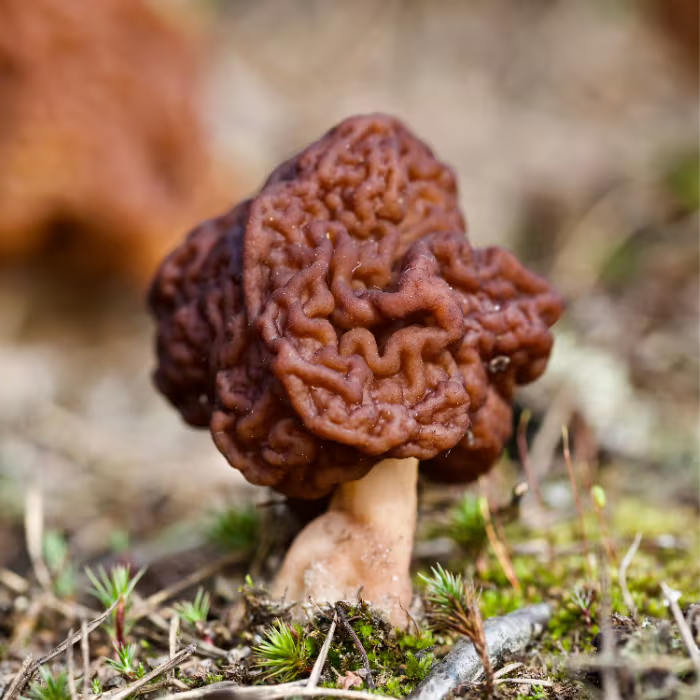
False morels are real and they can cause serious harm headaches, vomiting, and worse. They grow in the same habitats as true morels and can look similar at a glance.
The fastest check is by slicing the mushroom in half lengthwise. True morels are completely hollow inside. False morels are not. They’ll have cottony fibers or chambers. When in doubt, leave it—no mushroom is worth the risk.
If you’re new to morel hunting, go out with an experienced forager your first time, or at minimum bring a reliable field guide.
Morel maps and tools
Scouting before you drive out is underrated. These resources are worth bookmarking:
The Great Morel: a community-powered sighting map updated throughout the season. Great for tracking the progression in your region.
Michigan DNR Morel Map: burn area overlays specifically for Michigan hunters.
NOAA soil temperature data: honestly the single most useful thing you can check before making the drive out. When soil hits 50°F at your target elevation, the season is on.
A Note for Maine foragers
We’re based in Portland, Maine, so this one’s for our neighbors.
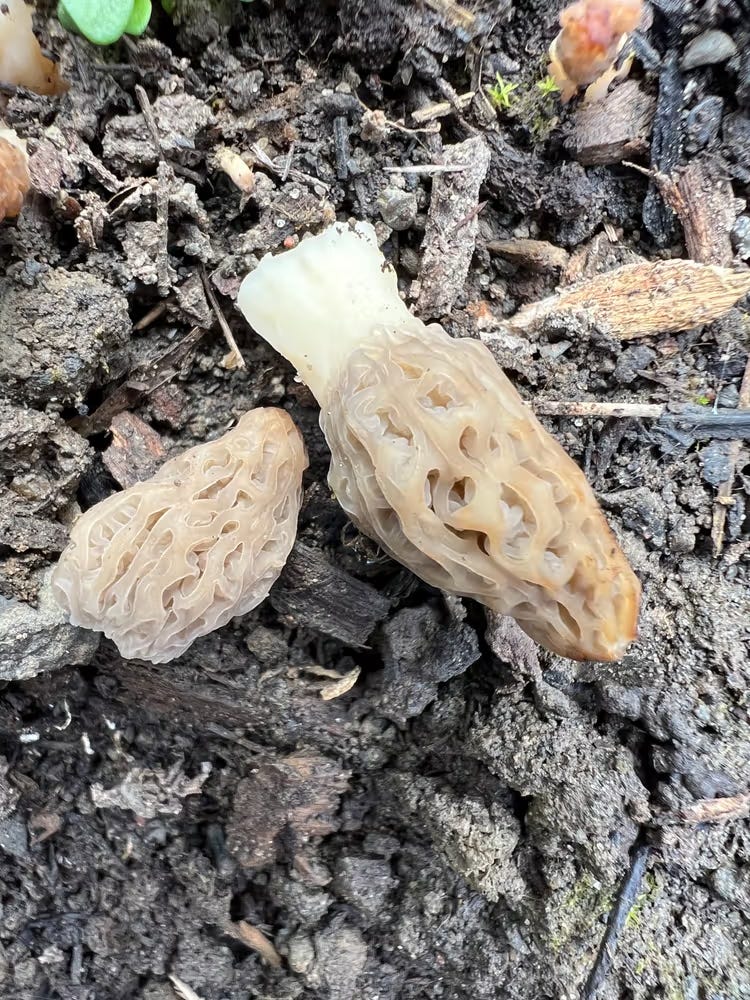
Maine is not the easiest place to find morels. They’re less abundant here than in the Midwest, but they’re absolutely out there, and finding one feels like a genuine prize. The season usually runs from May through June, with southern Maine and the coast warming up first. If you’re hunting in the northern part of the state, expect to wait a bit longer.
Old apple orchards are one of the most reliable spots for yellow morels in Maine, especially when the trees are blooming. Ash trees in rich woods and dead or dying elms are also worth targeting. Coastal areas with limestone-heavy soils tend to be more productive than the acidic inland soils further north.
One important heads-up: Maine State Parks and Historic Sites do not allow gathering or collecting of any kind. Foraging is only permitted on Maine’s Public Lands. Always check the rules for your specific destination before heading out.
If you’re a Maine forager looking to connect with others, the Maine Mycological Association runs guided forays throughout the season. It’s a great way to learn from experienced locals and find spots you’d never stumble onto alone.
You can also grow your own
Here’s something most people don’t know: morels were considered nearly impossible to cultivate for decades.
North Spore lead mycologist Jon went to Paris to meet Chinese cultivators who are now growing reliably at scale season after season. He spent time learning the systems, understanding the strains, and figuring out how to adapt that knowledge for backyard growers back home. The result is our Morel Garden Kit. It’s built around that same field-tested commercial approach, using a high-quality commercial morel strain (ME4) and fully colonized substrate bags that sit directly on the surface of an outdoor bed, letting the mycelium expand outward from a nutrient-rich starting point. He also wrote up a full guide on the method.

It’s not easy. We are upfront that morels are an advanced grow, requiring attention to temperature, moisture, and timing. But for growers who want to take on the challenge, this is the most dependable method currently available for backyard morel production.
So go find some mushrooms
Whether you’re heading into the woods this weekend or planning your first outdoor bed, morel season doesn’t wait. The conditions are aligning, the sightings are coming in, and somewhere out there a flush is happening right now. Good luck out there!
Have questions about foraging morels or growing them at home? Drop them in the comments!
That's really great. I love it and I would like to know how to grow Shiitake brown mushrooms
What about New England for rough timing guide? Surprised North Spore home region wasn’t mentioned! We have found them in April in MA through June in ME. Just wondering what region we would be “roughly” included into?!