
Understanding the Different Types of Magic Mushrooms
A practical guide to psychedelic mushrooms, potency, chemistry, and harm reduction

The information in this article was provided and guided by our friends over at Psychedelic Passage. Psychedelic Passage is a trusted network of vetted psychedelic therapy providers.
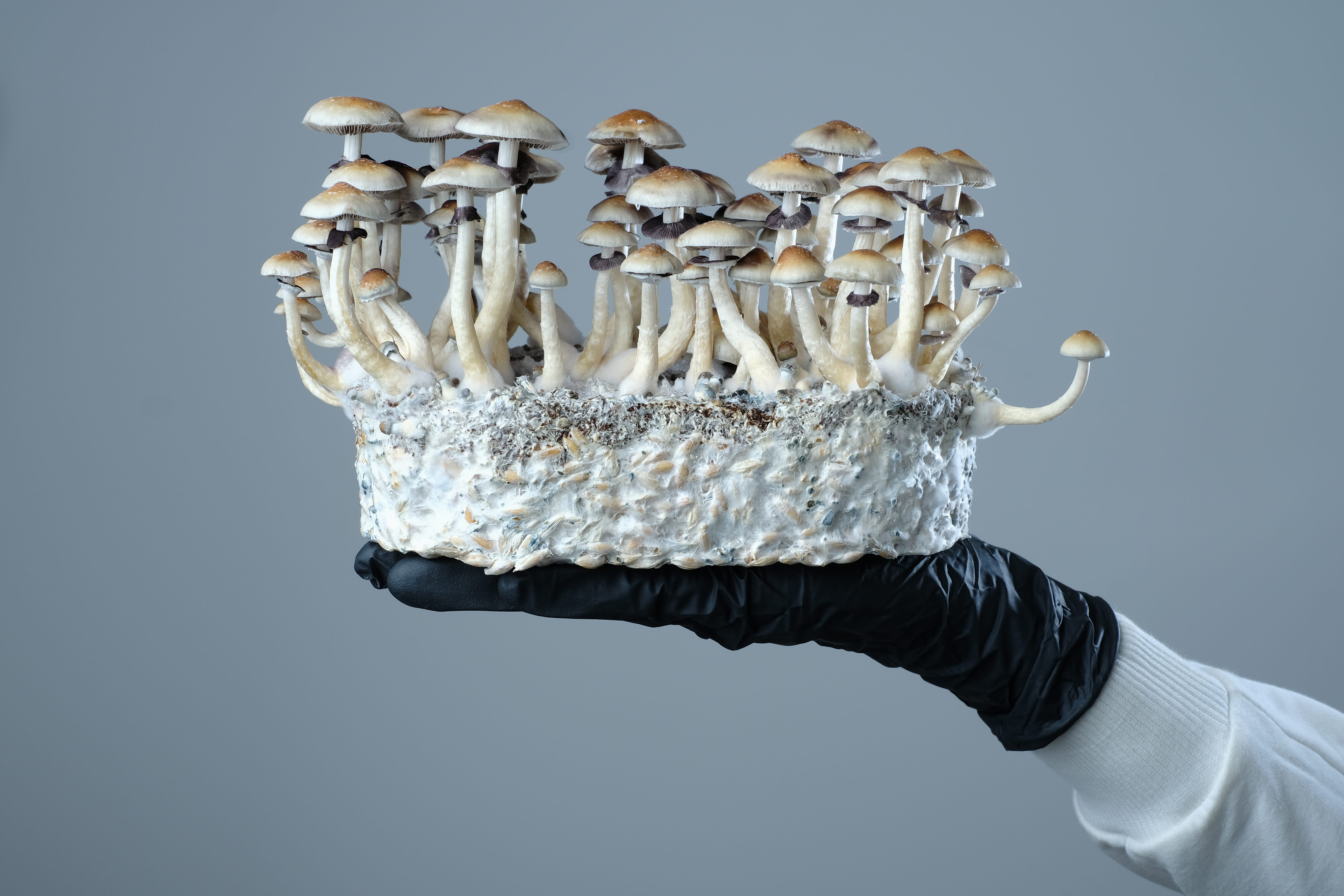
Psychedelic mushrooms, often called “magic mushrooms,” are rarely discussed with the necessary nuance. In some circles, they are treated as essentially interchangeable. In others, specific strains or species are spoken about as if they have distinct personalities, emotional signatures, or guaranteed outcomes. One mushroom is said to be gentle and heart-opening, another visual and playful, another intense or therapeutic. In practice, these descriptors don’t tell the full story.
People searching for information about the different types of magic mushrooms are usually trying to answer practical questions. Are some stronger than others? Are some safer? Are some better for beginners, microdosing, or therapeutic use? The answer is more complex than it may seem. There are real biological and chemical differences between psychoactive mushrooms, but those differences do not function as reliable shortcuts to emotional outcomes.
Broadly speaking, magic mushrooms fall into two primary categories:
Psilocybin-containing species, which include both above-ground mushrooms and underground truffles or sclerotia (“magic truffles”), and appear across multiple genera such as Psilocybe, Panaeolus, Gymnopilus, and Pluteus.
Psychoactive mushrooms that do not contain psilocybin, most notably Amanita muscaria, which produce their effects through entirely different compounds and biological pathways.
Within these categories, differences in species, potency, and preparation influence risk and intensity far more than strain names alone. What they do not reliably predict is the emotional tone, psychological content, or meaning of an experience.
In this article, I’ll outline a practical way to think about magic mushrooms through classification, chemistry, potency, and harm reduction.
What is a “Magic Mushroom”?
At its simplest, a magic mushroom is one that produces psychoactive effects. Most commonly, this refers to mushrooms that contain psilocybin and psilocin, compounds that interact primarily with the serotonin system.
But psychoactivity in mushrooms is not limited to a single compound or even a single evolutionary lineage. Psilocybin and psilocin appear across several genera, while other mushrooms produce altered states through entirely different chemical mechanisms.
The term “magic mushroom” is an umbrella category, not a guarantee of similarity. Two mushrooms can both be psychoactive while differing dramatically in potency, onset, duration, physical effects, and risk profile.
Strains, Varieties, Species, and Genera
People tend to talk about mushroom strains. This language largely comes from cannabis culture, but in mycology it is often imprecise.
Mushrooms reproduce via spores, and each grow introduces genetic variability unless genetics are carefully isolated and cloned. Two batches labeled “Golden Teacher” may look similar while differing chemically and genetically. This variability is not user error. It is a fundamental feature of fungal biology.
Terms like variety and species are often more accurate. At a broader level, mushrooms are grouped into genera. Psilocybe is the most widely known, but it is far from the only genus that includes psychoactive species.
Understanding these layers helps explain why names can offer orientation without offering consistency. A label can point toward a general lineage or morphology, but it cannot reliably guarantee potency or experience.
